
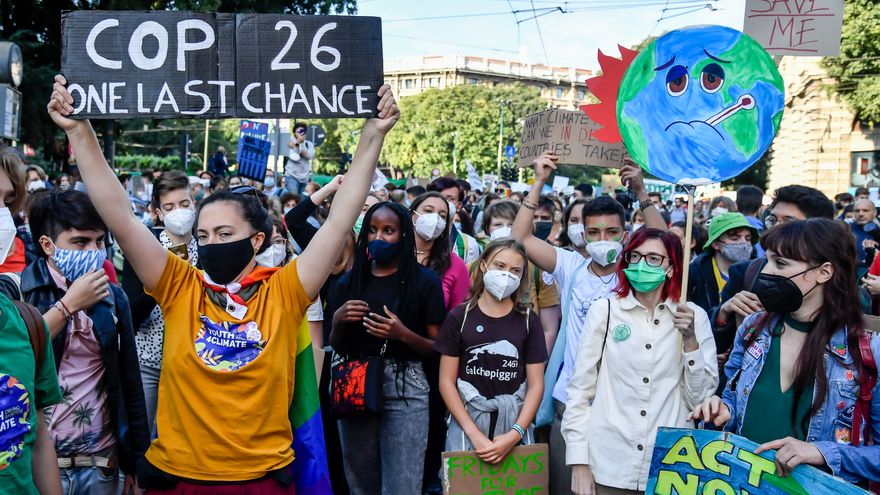
 Climate and Ecological Crisis: Humanity at a Crossroads
“Floods, extreme heat, desertification, and droughts are just a few of the signals the planet is sending us. Either we change the economic system—or we disappear.”
— Diego Arias Serna, “Capitalism versus Climate Change”, 2015
 A Planet on Fire
Human presence has always transformed the Earth, but since the Industrial Revolution, the impact has become devastating. The relentless exploitation of natural resources has led us to an ecological and civilizational collapse that now threatens our very existence.
We are witnessing record-breaking heat waves, megafires, water scarcity, and the accelerated extinction of species—while global leaders fail to act decisively. Economic interests continue to outweigh environmental and social survival.
“We would rather be gardeners on Earth than miners on Jupiter.” — Jorge Riechmann
 The Reality in Numbers
 1. The planet is heating fast
According to the UN IPCC (2023), the global average temperature has already risen 1.2°C above pre-industrial levels. If emissions are not drastically reduced, we will surpass 1.5°C before 2030.
 Suggested graphic: Timeline of global temperature rise (1880–2024)
 2. Emissions and inequality
The richest 1% of the global population produces over 16% of total CO₂ emissions, while the poorest half of humanity contributes just 8%.
A billionaire emits more than 70 tons of CO₂ per year, compared to 2 tons for an average person.
Suggested graphic: Comparative bar chart — carbon emissions of the top 1% vs. bottom 50%.
 3. Deforestation and biodiversity loss
Every year, humanity destroys around 10 million hectares of tropical forest. In Colombia alone, over 113,000 hectares were lost in 2024, mostly in the Amazon region.
Deforestation disrupts biotic connectivity, destroys habitats, and accelerates the mass extinction of species. According to IPBES, nearly 1 million species are currently threatened with extinction.
Suggested graphic: Interactive map showing deforestation hotspots and biodiversity density.
 4. Ecosystems in collapse
Insects and pollinators are disappearing at alarming rates—up to 75% in some regions. Bees, responsible for pollinating 70% of food crops, are dying due to pesticides and climate disruption.
Suggested graphic: Infographic showing the link between pollinators and global food supply.
 5. The hidden cost of war
The global military industry is one of the largest emitters of greenhouse gases—yet its impact is concealed under “national security secrecy.”
Meanwhile, resource-driven wars over oil, water, and lithium continue to devastate people and ecosystems.
 The Inequity of Global Warming
-
Africa accounts for only 4% of historical emissions, yet suffers the greatest consequences.
-
The United States and Europe together represent nearly half of all cumulative emissions.
-
In Latin America, Brazil, Mexico, and Colombia are among the region’s largest emitters.
Suggested graphic: Pie chart of historical greenhouse gas emissions by region.
 The Sixth Mass Extinction
Scientists agree: we are living through the sixth mass extinction—the first caused entirely by human activity.
“One-third of coral reefs, one-quarter of mammals, and one-fifth of birds are on the path to extinction.”
— Elizabeth Kolbert, “The Sixth Extinction”
 Earth and Water on the Brink
-
Humanity has already lost 87% of the world’s wetlands.
-
Each year, 24 billion tons of fertile soil are lost.
-
By 2025, two-thirds of the planet will face water stress.
-
1.8 billion people will experience extreme water scarcity.
Suggested graphic: Global water stress projection map for 2030.
 Climate Summits: Words Blown Away by the Wind
Since 1972, the world has held more than 50 international climate conferences.
The most recent, COP28 (Dubai, 2023), made history by recognizing the need to “transition away from fossil fuels,” yet failed to establish binding timelines or funding mechanisms.
“The needs of vulnerable peoples have been sacrificed on the altar of the rich world’s self-interest.”
— Mohamed Adow, Power Shift Africa
 What Can We Do?
We cannot expect those who caused the crisis to be the ones who fix it.
Change must come from the ground up — from communities, grassroots organizations, and conscious citizens who act locally to protect life.
Every tree planted, every forest protected, every act of awareness matters.
At the Neotropic Foundation, we work daily to restore forests, conserve biodiversity, and educate new generations about sustainability.
 Be Part of the Change
 Adopt one square meter of biosphere.
Your support helps protect rainforest ecosystems, restore degraded land, and create jobs for native forest rangers who guard these lands with love and dedication.
Together, square meter by square meter, we are saving the planet.