
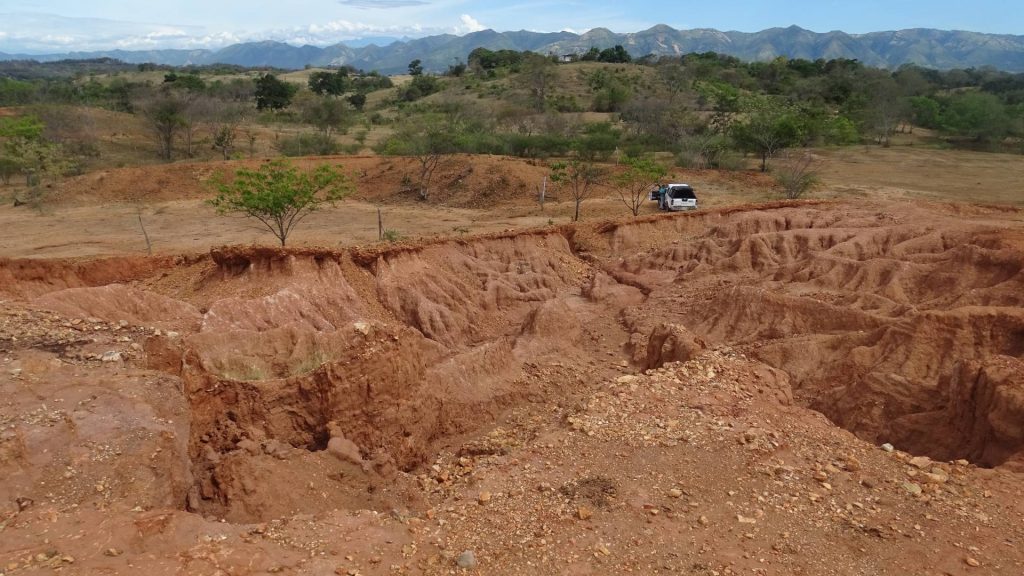
Deforestation in Colombia in 2020 — and What’s Happened Since
In 2020, deforestation surged in Colombia: approximately 171,685 hectares of forest were cleared — an 8% increase compared to 2019’s 158,894 hectares.
That year, deforestation was most acute in the Amazon region, where 109,302 hectares were lost — up from 98,256 ha in 2019 — representing 63.7% of illegal logging nationwide.
Other regions also saw increases: in the Andean region, 3,771 more hectares were lost than the previous year. In the Caribbean, deforestation rose by 105 hectares. In contrast, the Pacific and Orinoquia regions each saw a modest drop in tree loss. The five departments accounting for 70% of deforestation were Caquetá, Guaviare, Putumayo, Antioquia, and Meta — with Meta showing the steepest rise (~6,500 ha), while Chocó reported the largest reduction (~2,900 ha).
In 2020, the Government reaffirmed its goal of zero net deforestation by 2030, launching efforts such as the Artemisa campaign and creating a National Council to Combat Deforestation. Authorities pledged to work in coordination with the Attorney General’s Office, armed forces, and environmental agencies to strengthen enforcement.
Updated Data & Trends
In 2023, Colombia achieved its lowest deforestation rate in 23 years, with forest loss dropping to 79,256 hectares, marking a 36% reduction from 2022. AP News+2interfaithrainforest.org+2
However, in 2024, deforestation rebounded sharply. Colombia recorded 113,608 hectares of forest loss — a 43% increase over 2023 — largely concentrated in the Amazon (~65% of the total), driven by wildfires, land grabbing, cattle expansion, illegal road construction, and illicit crop cultivation. Reuters+3Reuters+3Colombia One+3
In early 2025, the trend showed signs of improvement: deforestation fell 33% in the first quarter compared to the same period in 2024, dropping from 40,219 ha to 27,000 ha. The Amazon saw notable gains in national parks such as Tinigua, Chiribiquete, and La Macarena (54% reduction). AP News
Causes and Challenges
The drivers behind deforestation remain largely consistent:
Land grabbing and praderización (conversion to pasture)
Extensive cattle ranching
Unplanned infrastructure expansion
Illegal mining and illicit crop cultivation (e.g., coca)
Weak enforcement and loopholes in permitting
Forest fires exacerbated by drought and climate change
Despite progress in certain years, pressures persist — especially in key Amazonian zones bordering protected areas and Indigenous territories. MAAP+3Forest Trends+3IUCN NL+3
Conclusion
The 2020 deforestation spike was a grim landmark, but it spurred renewed urgency in Colombia’s environmental policies. While 2023 showcased historic reductions, the reversal in 2024 underscores the fragility and volatility of forest conservation. The window for protecting Colombia’s forests is still open — but it demands sustained vigilance, stronger enforcement, community participation, and robust conservation strategies.
As part of this effort, the Fundación Neotropic stands committed to contributing through land acquisition, protection, reforestation, and community engagement in critical regions.